All categories
Initial focus · educational
Flex Industrial & Commercial Properties
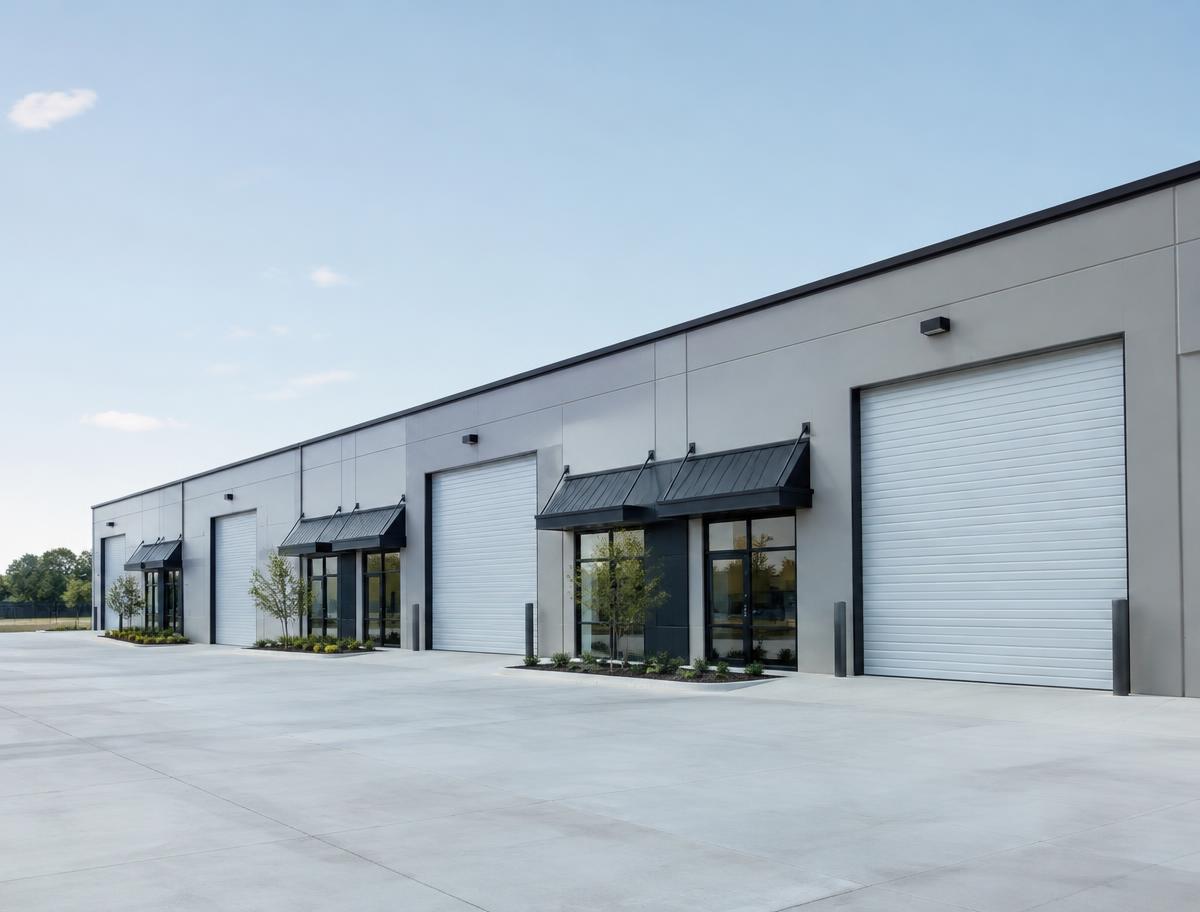
Flex properties combine warehouse and office or showroom space for trades, distributors and service businesses. Income comes from tenant leases, and value is commonly estimated by dividing net operating income by a market capitalization rate.
Typical assets
- Small-bay flex buildings
- Light industrial and service-commercial centers
- Owner-user conversions
Common cashflows
- Tenant base rent and expense reimbursements
- Lease renewals and rent resets
- Sale or refinance proceeds at exit
Key risks
- Tenant credit, rollover and vacancy
- Cap-rate expansion lowering exit value
- Debt refinancing and interest-rate risk
- Capital expenditures (roofs, HVAC, paving)
- Local market oversupply
Questions to ask
- What is the tenant mix and lease expiry schedule?
- Is the debt fixed or floating, and when does it mature?
- What exit cap rate is assumed and why?
- What reserves exist for capital repairs?
Illustrative scenario
A hypothetical $4M flex property with $300k NOI, 60% leverage and a seven-year hold. Use the Lab's exit-cap sensitivity to see how valuation assumptions dominate modeled returns.
This guide describes a category, not an offering. LotVest has no developer projects, yields or approvals to share. Any future offering would be presented only through an SEC-registered, FINRA-member intermediary after counsel review, and individual property SPV eligibility must be separately reviewed.